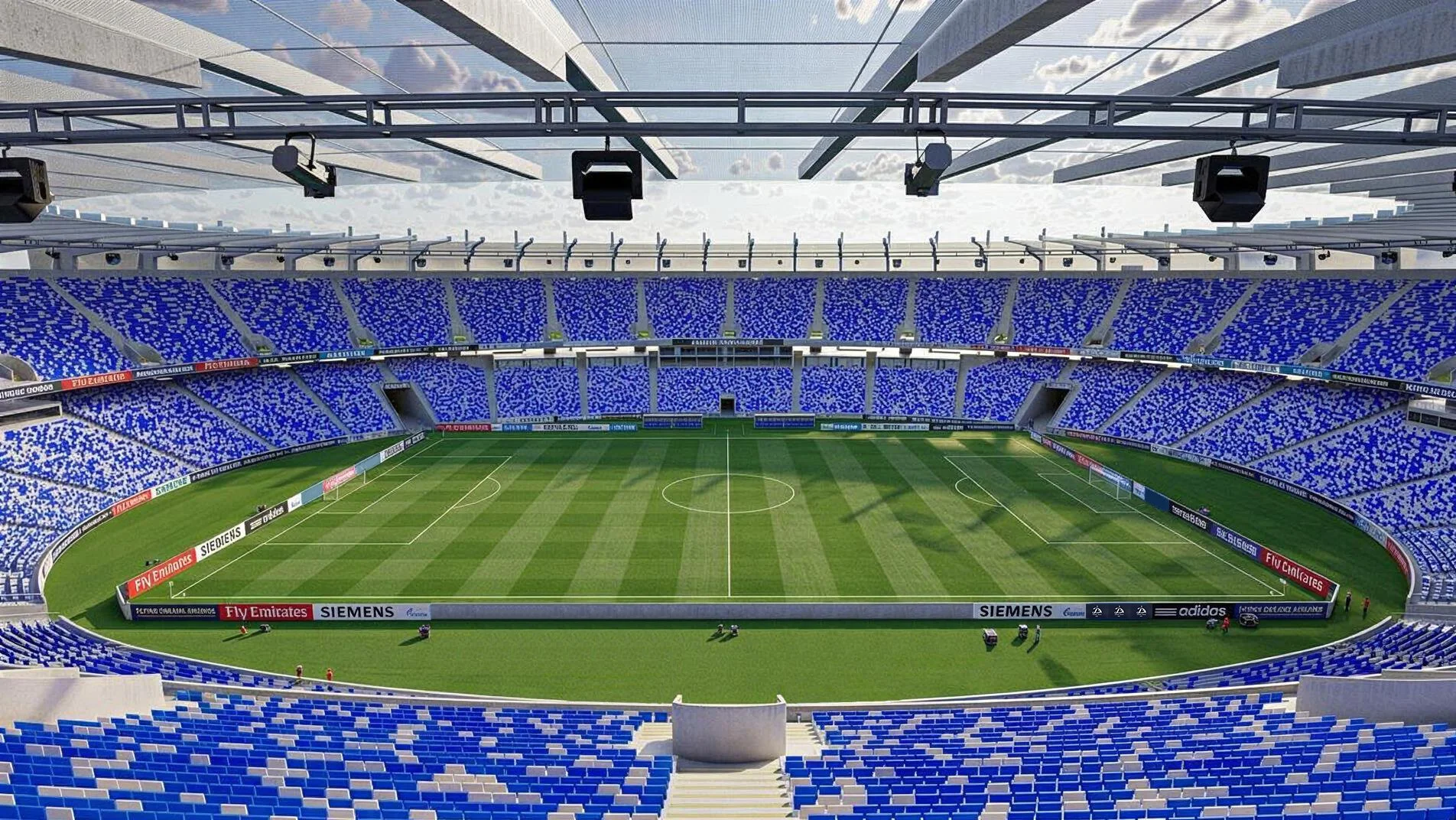
TBILISI DINAMO ARENA
RECONSTRUCTION - CONCEPT DESIGN 2026
Dinamo Arena is a significant sports complex located in the city center, surrounded by major urban arteries and intensive pedestrian and vehicular flows. Its central location results in continuous movement of people around the area throughout the day.
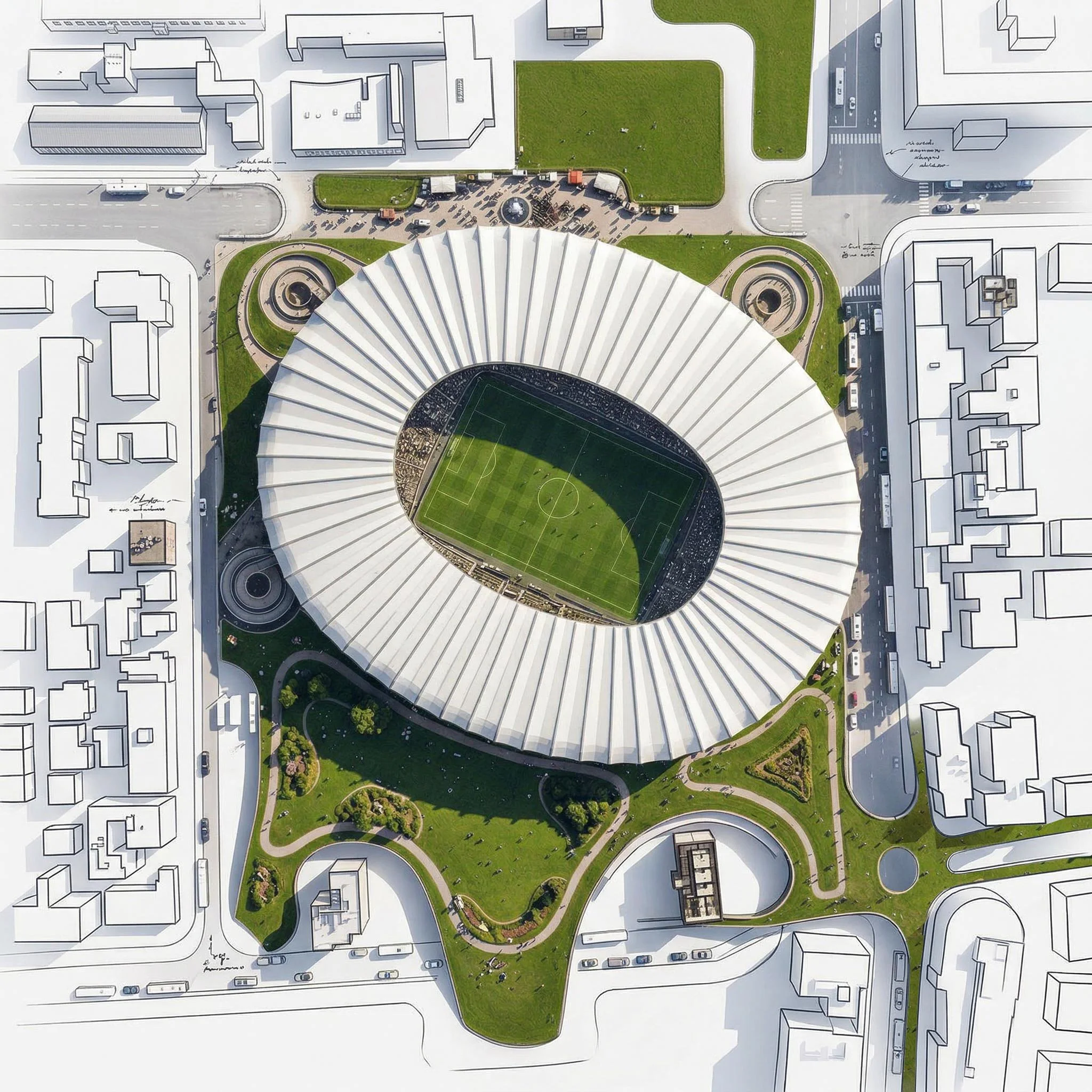
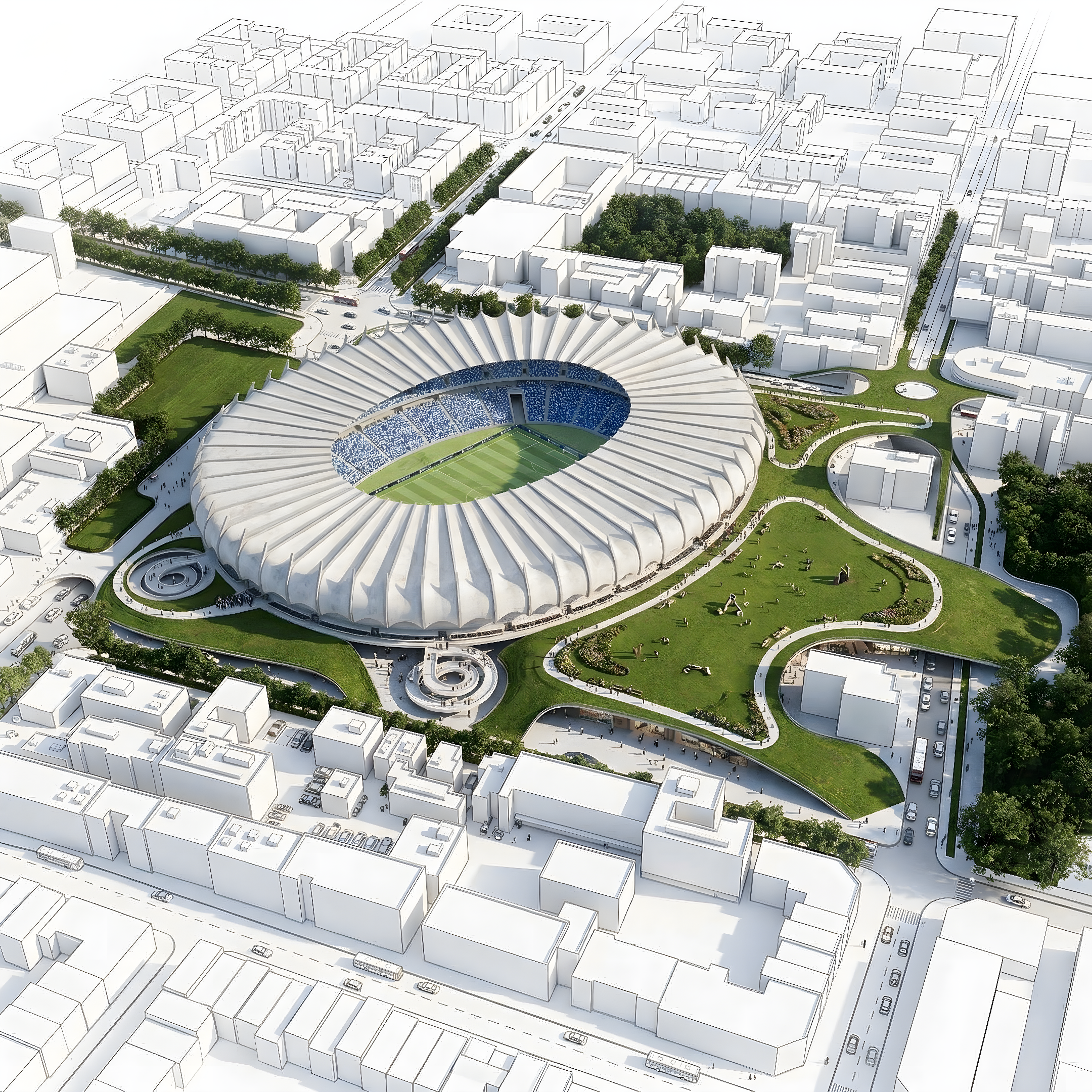
Currently, however, the stadium is enclosed by a continuous fence, which has turned it into an isolated object, detached from the urban fabric of the city, effectively creating an “island” within the city center. This isolation negatively affects both the stadium itself and the surrounding urban environment, representing a lost opportunity for both the stadium’s operation and its integration into everyday urban life.
A major issue is the extremely limited land area belonging to the stadium. The open space beyond the building’s footprint is minimal, yet it must simultaneously accommodate three essential and competing functions.
Function I – Parking:
Parking is not only a mandatory requirement during matches and large-scale events, but also an essential component for improving the urban fabric. The existing surface area is insufficient to accommodate the required number of vehicles.
Function II – Public Space:
This function enables gathering, organization, and circulation of people, as well as entry and exit during matches, concerts, and other events. It also provides space for recreation and social interaction in everyday life for all residents of Tbilisi. However, the available area around the stadium is minimal and only meets evacuation requirements.
Function III – Economic:
This refers to revenue-generating commercial spaces, which are essential for ensuring the long-term financial sustainability of the stadium—not only on the days of event, but continuously at all times. Commercialization is critical for the healthy operation of the stadium.
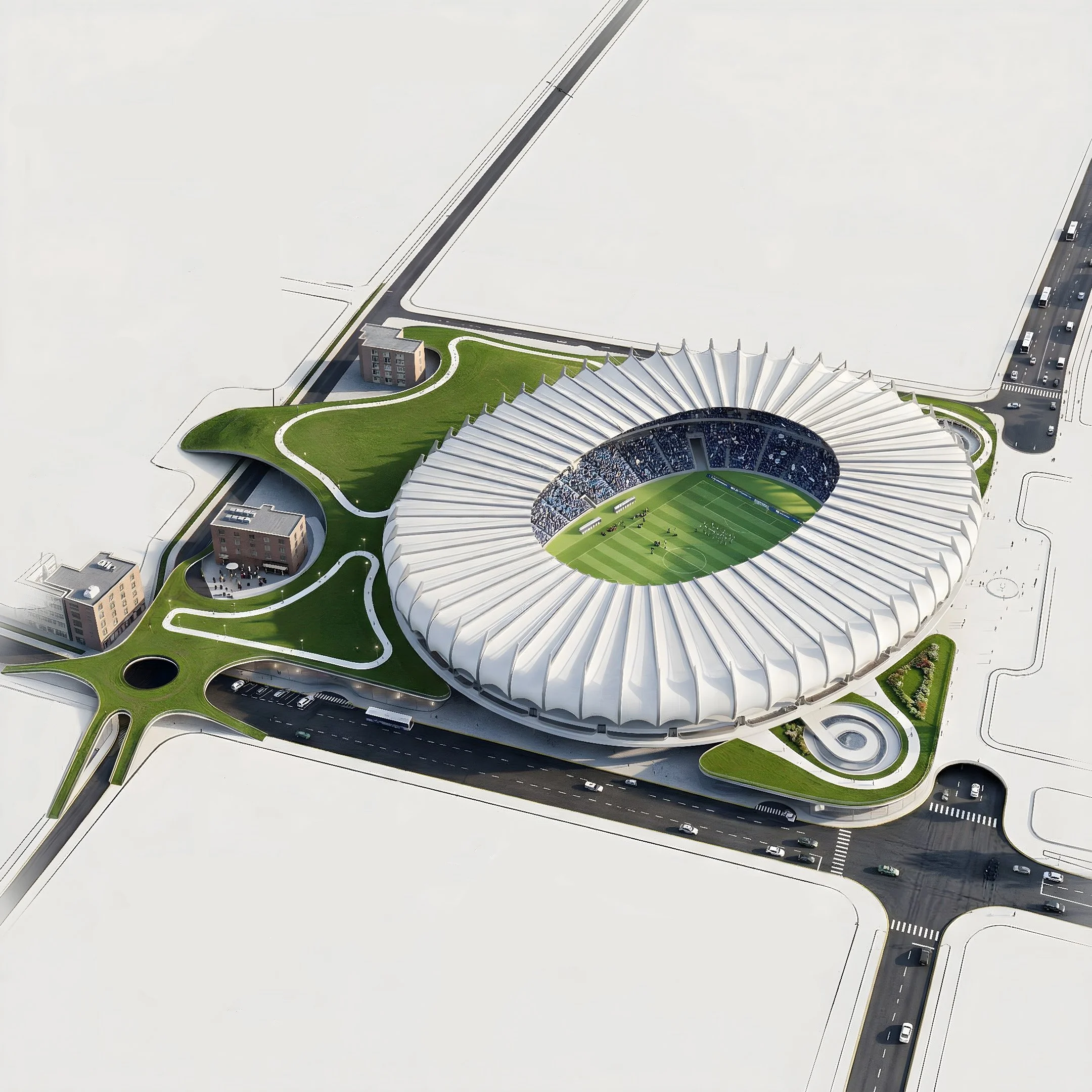
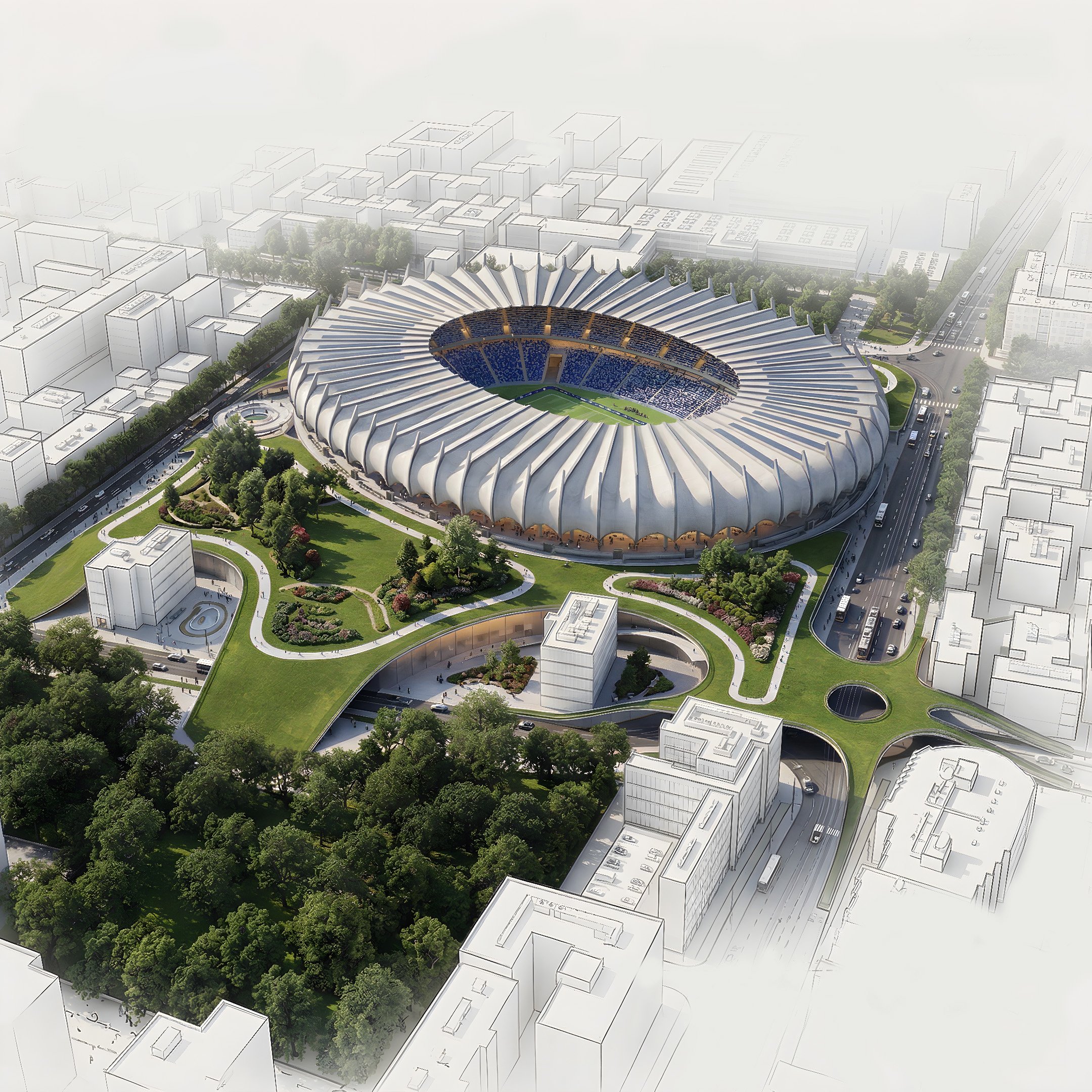
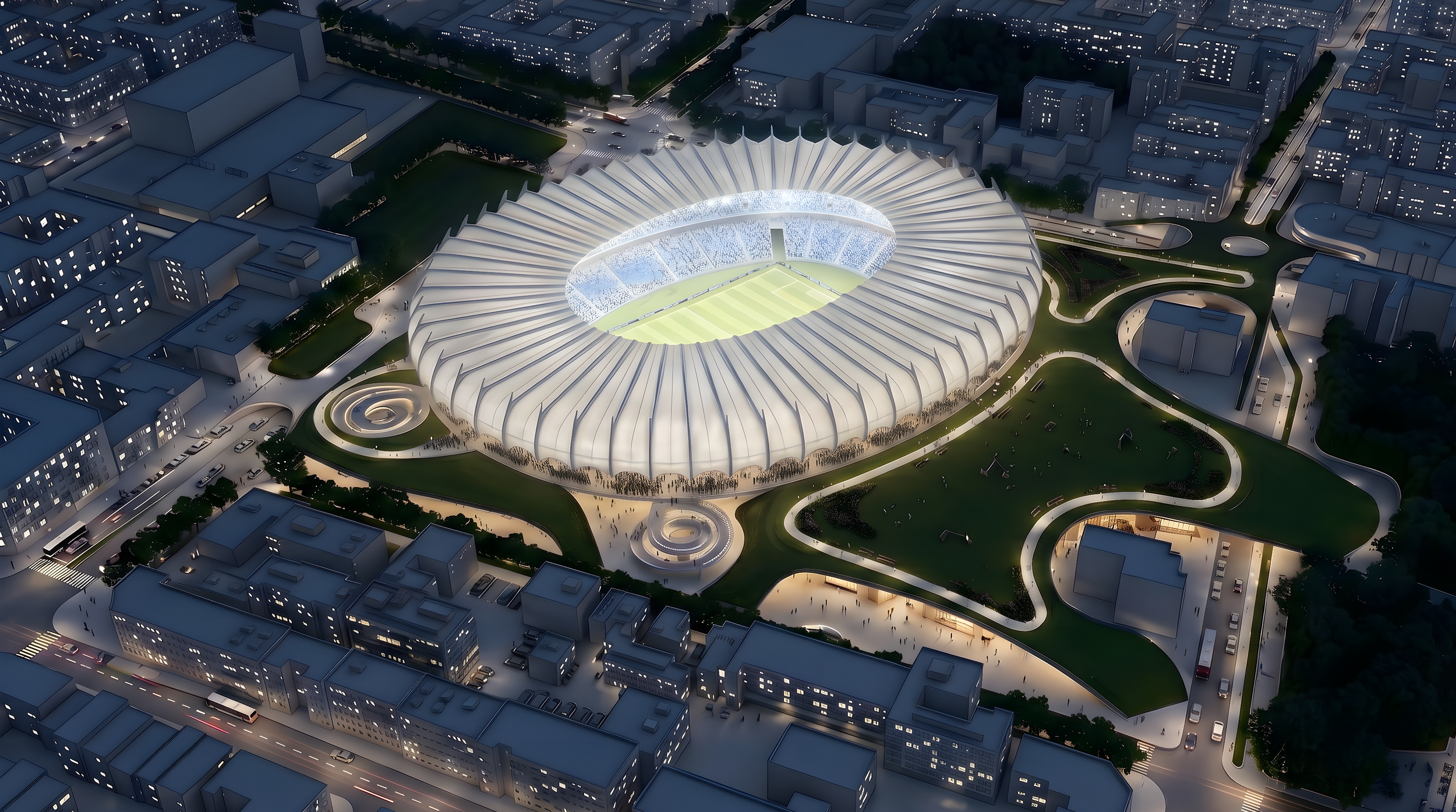
The architectural concept addresses these challenges by clearly separating functions into horizontal zones, stacked vertically in independent layers.
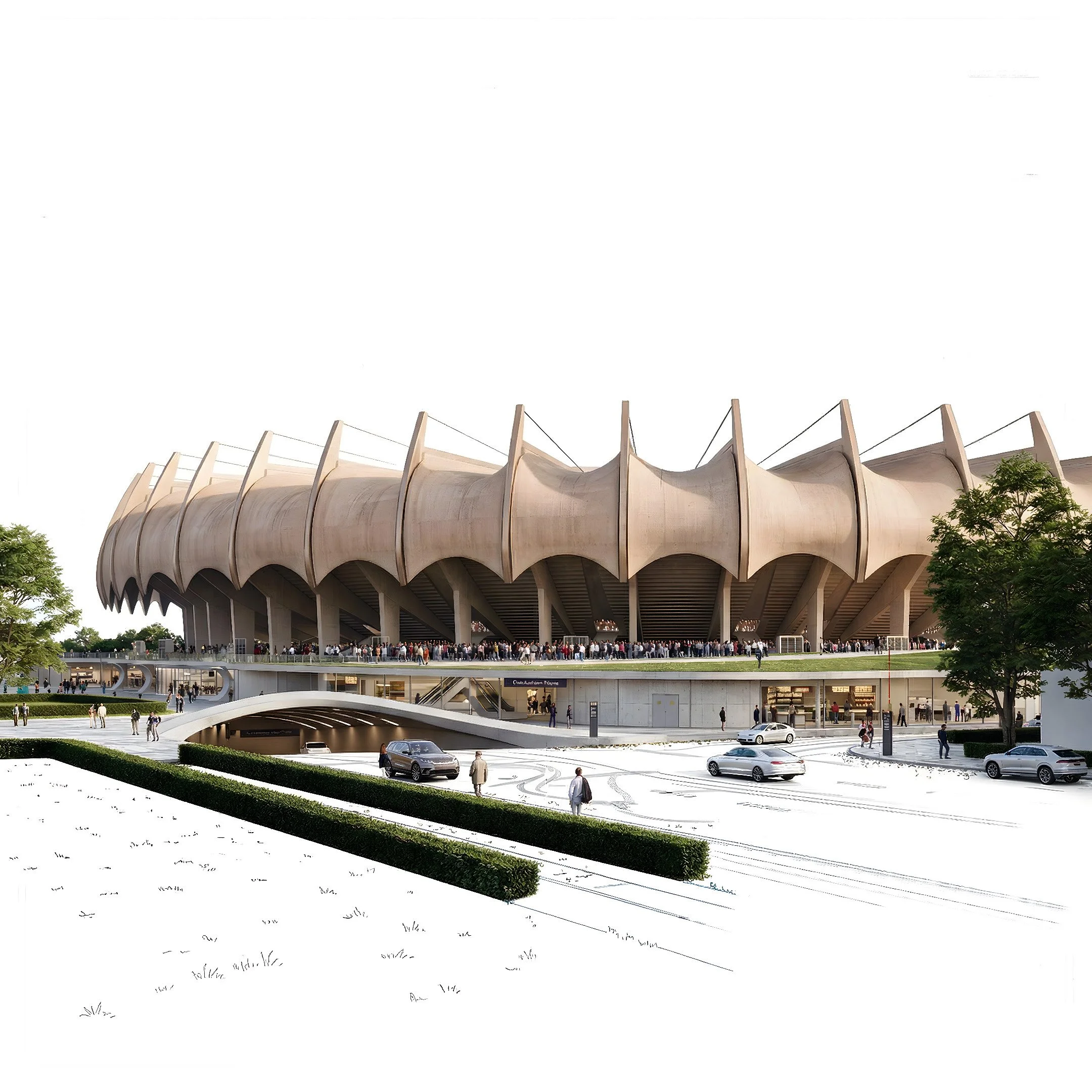
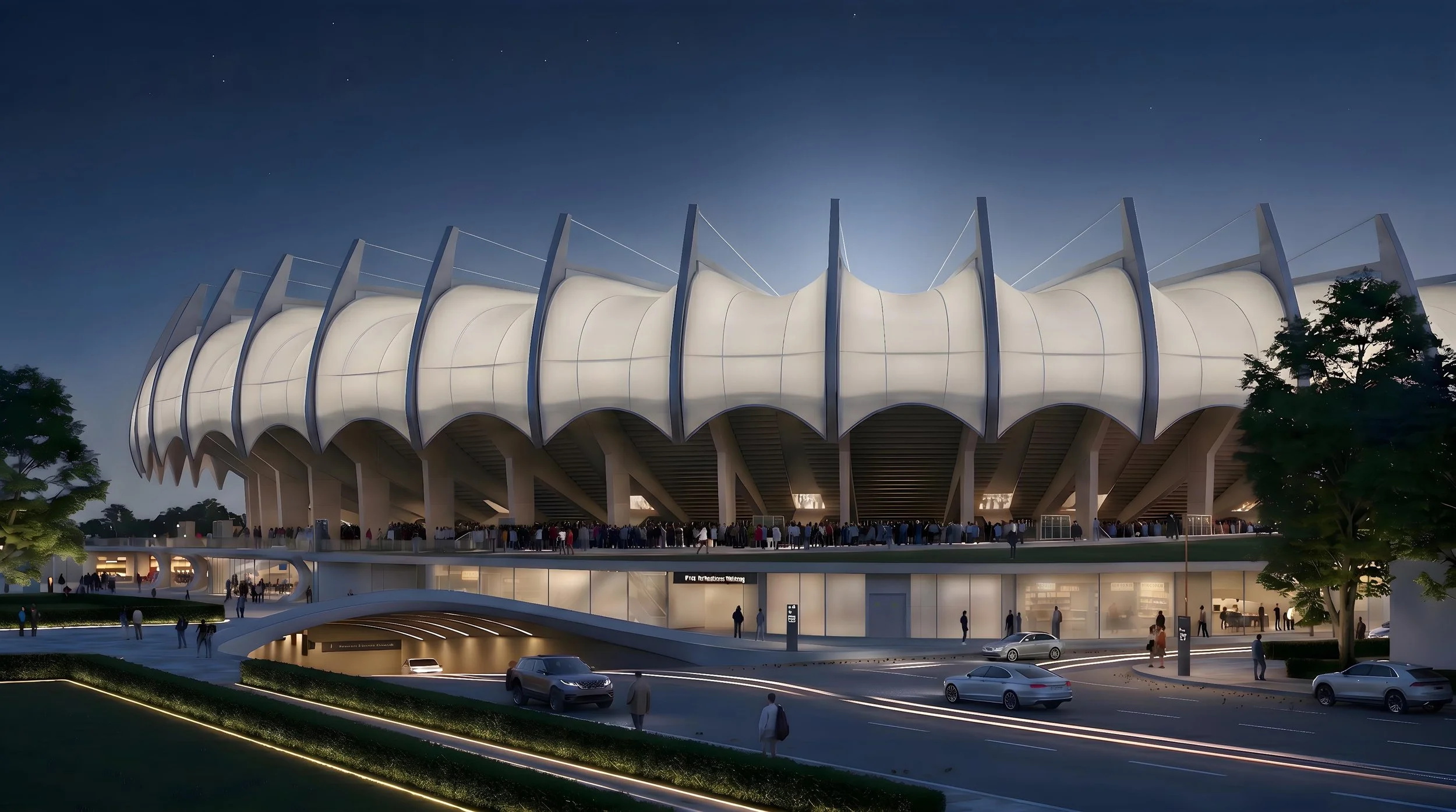
Underground Level: A single-level parking facility is moved entirely underground, freeing the surface from vehicles. Entrances from the roads on all four sides of the complex.
Ground Level: Fully dedicated to public and commercial functions—stadium museum, club, retail, cinema, and more.
This level is conceived as a completely open and publicly accessible environment. It functions as a multifunctional district—public, commercial, retail, and entertainment—where people move similarly to a large shopping district. Even in the absence of events, the space remains active, accessible, and integrated into daily urban life, transforming the stadium into a major urban hub.
The natural terrain is utilized as a spatial and architectural advantage. Level differences allow for diverse commercial spaces—large, high-ceiling areas, smaller intimate spaces, as well as multi-level interiors—enhancing both spatial diversity and economic flexibility.
Roof of the Ground Level:
Fully accessible and functioning as a public space—an urban plaza for daily use, while also serving as the main gathering and circulation area. During large events, it provides direct access to the stadium at the evacuation balcony level, (Part of the old structure) meeting required evacuation standards.
A key aspect of the concept is the controlled separation and selective connection between the commercial zone at ground level and the activities on its roof. While certain connections exist, they are strictly regulated. During events, commercial spaces can be safely isolated, ensuring security, while spectators access the stadium directly via the roof level without entering commercial areas.
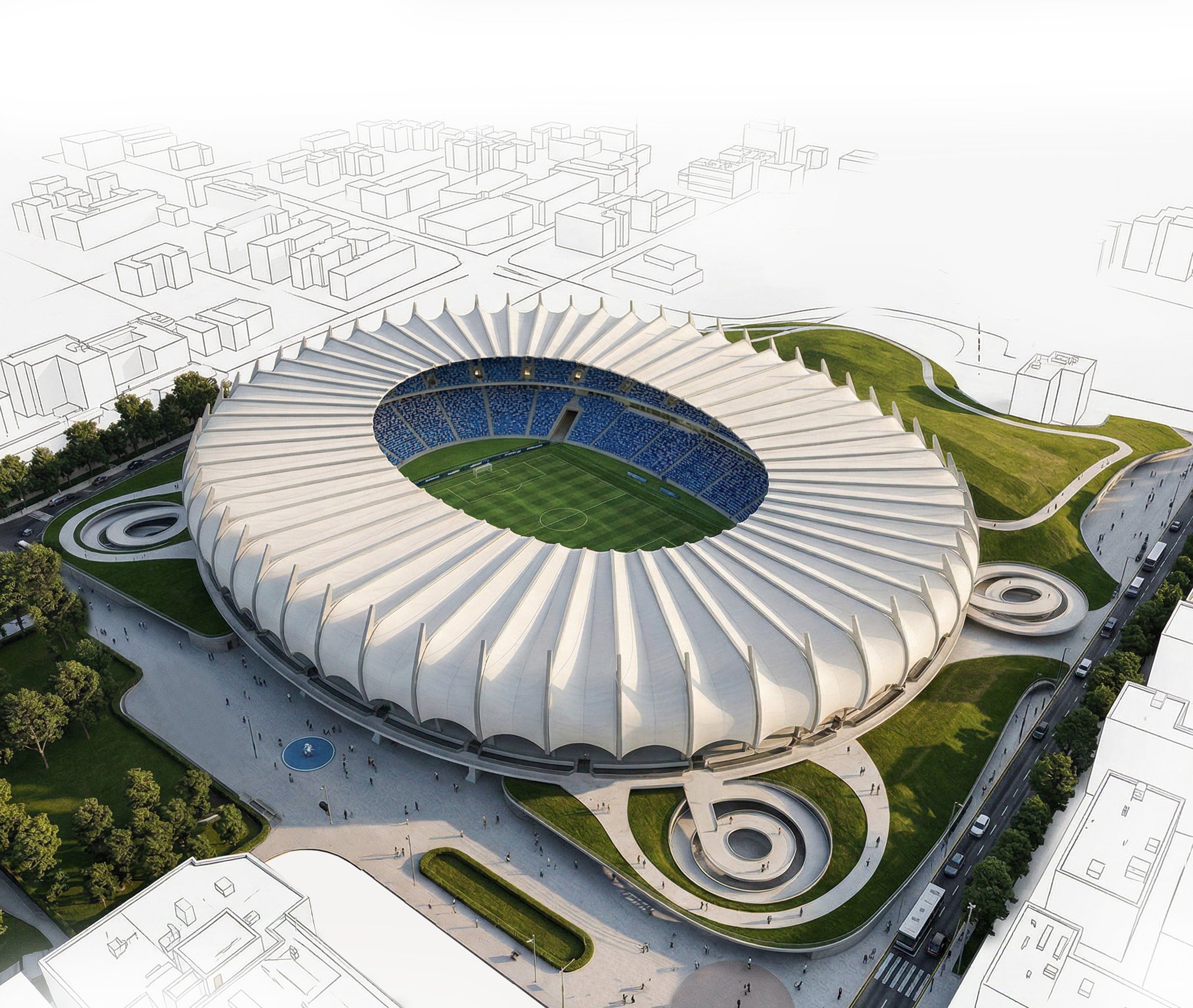
Through this layered, flexible, and multifunctional spatial strategy, the stadium transforms from a fenced, single-purpose object into an active, economically sustainable, and socially integrated urban complex functioning both during events and in everyday city life.
Reconstruction Objectives:
I. Increase capacity (up to 70,000+ spectators)
II. Provide parking (in accordance with UEFA requirements)
III. Create public space integrated into the city
IV. Introduce commercialization (revenue-generating spaces)
Capacity Increase Measures:
Removal of the running track and transformation into a pure football stadium
Complete redesign of the first tier
recreating a new tier while preserving optimal sightlines
Creation of additional field-level entrances
Preservation of the existing second tier, evacuation balcony, and structural roof system
Reconstruction of the roof cover to cover 100% of seating places.
Development of spaces under the new first tier for sports, administrative, and operational uses
Parking, Public Space, and Commercialization:
Removal of fences and opening the area for pedestrian permeability
Creation of underground parking (~800 cars) at level -1
Development of commercial spaces above parking (1–2 levels depending on terrain)
Transformation of the commercial roof into a public park/green zone and main circulation space during events
Historical Overview:
1936: Stadium built by Archil Kurdiani (25,000 capacity)
1956: Reconstruction to 35,000 capacity (Archil Kurdiani with Gia Kurdiani)
1976: Major reconstruction (Archil & Gia Kurdiani) → 75,000 capacity
2006: Reconstruction for UEFA compliance (Gia Kurdiani & Archil K. Jr.) → 55,000 capacity
2014–2015: renovation for UEFA Super Cup (Gia K., Archil K. Jr., Giorgi Kurdiani)
Over decades, such a complex and dynamic organism as a stadium requires continuous renewal, new visions, and integration of modern functions. This process has been carried out over 90 years by four generations of the Kurdiani architectural dynasty.
At the initiative of Dinamo’s president Roman Pipia, a meeting was held with the existing authors of the stadium, where discussions began regarding the existing problems, modern requirements, and possible solutions. Based on this process, the authors developed the presented concept.
The history of Dinamo Arena is, above all, a 90-year story of continuous reconstruction and architectural transformation, carried out by four generations of the Kurdiani architectural dynasty since 1936.
The new reconstruction concept, developed by the copyright holders, reflects contemporary requirements and addresses the outlined challenges.
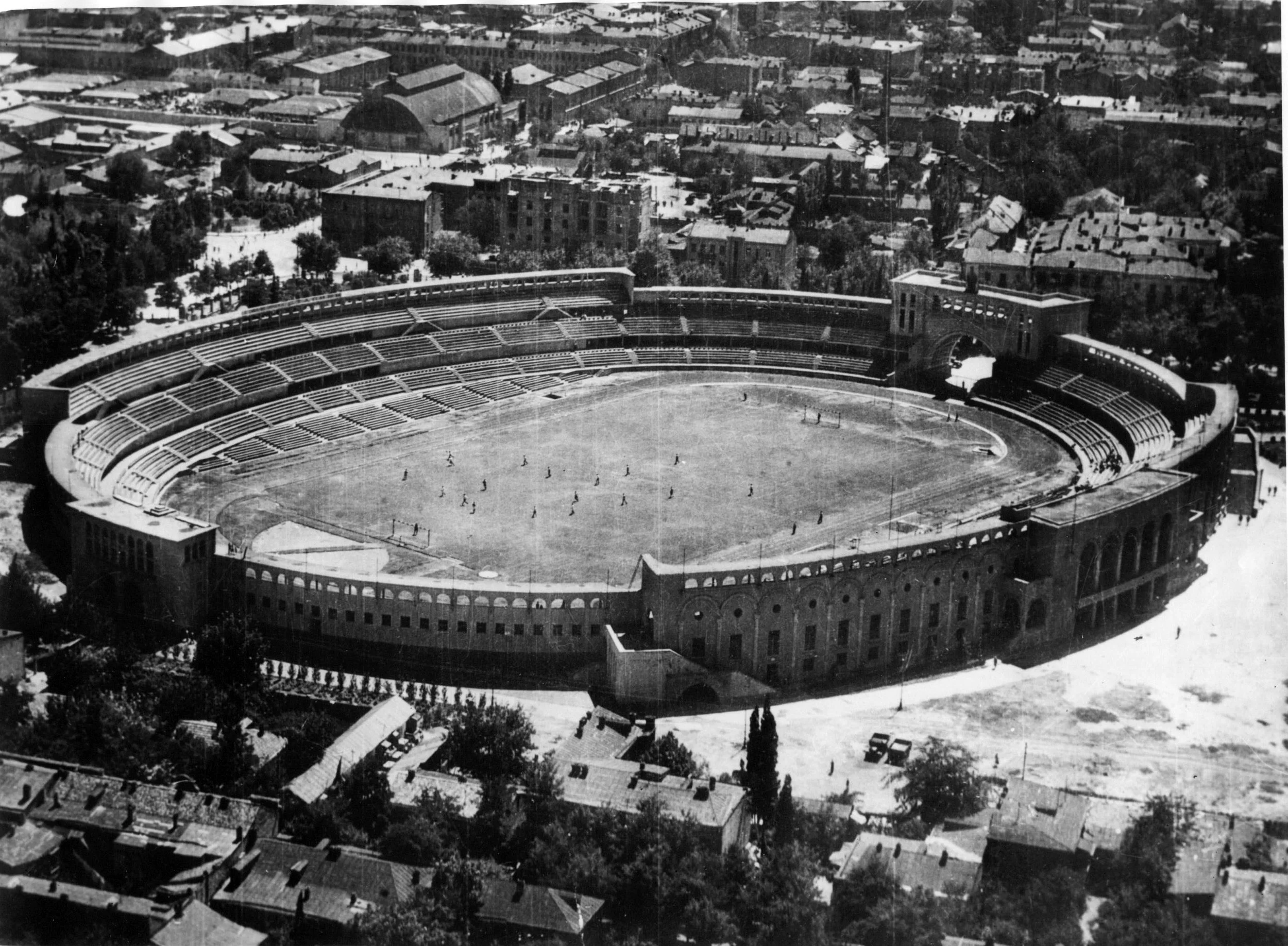
1936
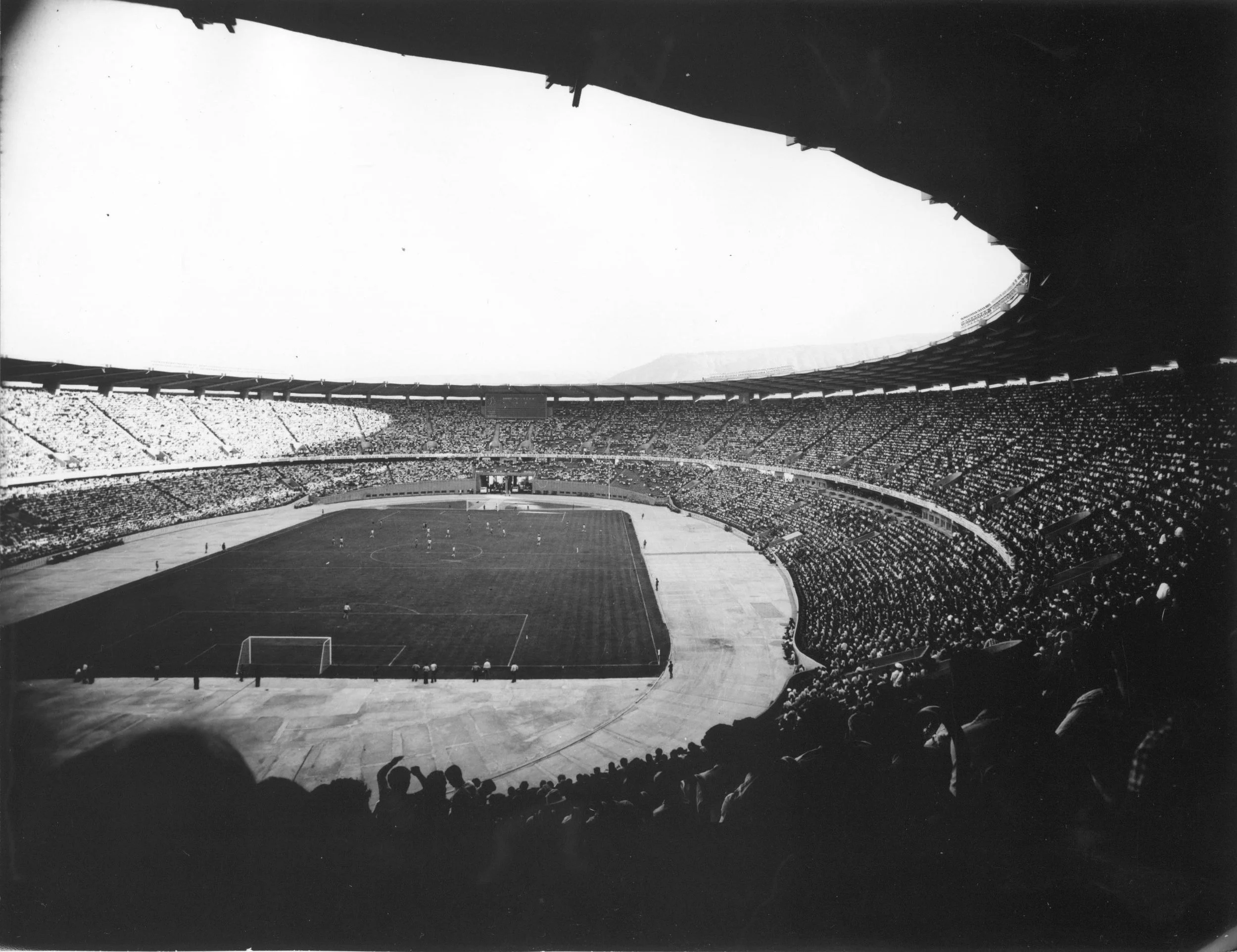
1976